
Carla's Story
From TV producer to marketing manager
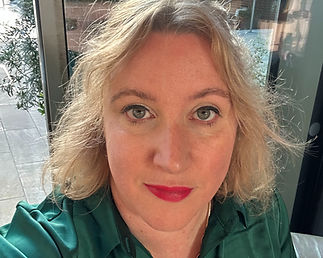
Carla Francome spent more than 20 years working in television production, producing everything from Come Dine With Me to current affairs programmes and science documentaries. When the TV industry suddenly contracted, she found herself needing to rethink everything. What followed was an unexpected move into tech, where her storytelling, communication and people skills found a new home. She now works as Marketing Manager at Ctrl O, combining creativity, strategy and relationship-building in a role that feels surprisingly familiar to her TV career.
What do you do now, and what does your current work involve?
I’m a Marketing Manager for a small software company called Ctrl O. The company has been going for ten years and is full of interesting and very clever software developers and business people, but they didn’t have someone concentrating on communications before. I’ve been here for two years, and my role is really varied.
I write a lot about what we provide and what we do for the website and leaflets. I go to events, give talks, network, and I work with the technical team when planning demonstrations to show potential clients.
The software we sell is a case management system called LinkSpace. It’s used in the Ministry of Defence and Ministry of Justice. It’s really useful for guiding staff and teams through specific workflows where they need to be legally compliant, and also where people are working with sensitive data, as very specific access can be given for people to only see certain cases, or even only edit certain data fields.
The first thing I needed to do in the role was sit down with the experts in the company and really understand the software and all our use cases. Once I understood it all, I needed to work out how to explain everything in layman’s terms.
I took out acronyms and worked hard to make any descriptions conversational. I wanted to make sure that if anyone picked up our leaflets or came across our website, everything would make sense. So I tested quite a lot on my mum, and she came back and said she understood it all, so that was helpful!
Once I understood the system inside out, myself and the team collaborated to rewrite the website, write new leaflets, and plan targeted demonstrations of the software. We go to quite a lot of events where we’re at a stand, engaging people for a couple of days. It can be tiring, but I find it exhilarating. It’s a chance to meet all sorts of different people, and the skills of building rapport quickly have really helped.
What I also like about this role is I work with people who are extremely clever and talented, but have different skills to me. It feels like it really complements each other, whereas a lot of the time in my previous career in TV, I worked with people who had the same skills as me.
What do you regard as your first career or the path you originally started out in?
Working in TV production, I started on a graduate scheme after university. I worked as a producer for over 20 years, working on shows from Come Dine With Me to current affairs series and science documentaries.
Oddly, the skills for the role I do now feel really similar. When I worked in TV, I’d speak to experts on all sorts of subjects, understand complex information quickly, and work out how to explain it clearly to an audience, and when scripting software demos now, it’s not that different from scripting TV, and I find it just as interesting. My TV experience has transferred far more than I ever expected.
Have there been any other careers, roles or industries you’ve worked in along the way, including any detours, pivots or unexpected chapters in your career journey?
I grew up in a family of clowns and did clown shows a lot in my teenage years! I used to think of it as a bit of a quaint oddity, but now I think that it was really helpful experience for when I meet people at events, I always try and crack a few jokes and have a nice chat.
Looking back across your career so far, what prompted some of those changes in direction?
The TV industry shrunk very suddenly around three years ago. Lots of people I know were out of work, and I had a year where I couldn’t get work. I realised I needed to find something else, and urgently. I tried all avenues, including doing babysitting and dog walking.
At the time, I did quite a lot of cycle campaigning on social media. I’d built up a following of 16,000 from my videos and posts on X, which was Twitter back then. I would also talk at events about how to communicate effectively using photos and stories, and I was invited to talk at a big event at the London Cycling Campaign. Someone in the audience asked if I’d come and do a talk and give some advice to the local branch of their cycling campaign.
I did, and through that, I met an entrepreneur who was looking for someone to do comms for their tech company. I’d worked on a lot of science and tech documentaries, so it made sense. I started with some freelance work and it went well, so he offered me a staff job. I hadn’t had a staff job for 20 years, so it was very exciting!
Were there particular moments, opportunities or realisations that encouraged you to try something different?
Being out of work in TV was really tough, as it was for a lot of friends too, our whole career that we’d built up disappeared before our eyes. I’d spend hours filling in boxes on job applications, but I never had the exact experience, so I found it hard to get an interview.
What were some of the biggest challenges you faced when changing path?
Getting my foot in the door with people was hard. I applied for lots of roles telling stories through filmmaking at charities and organisations. Despite the fact that I’d done so much in TV, I didn’t even get interviews, which I found frustrating. I always felt that if I could get in the room with some of these people, I could persuade them I could do the role.
What helped you most in navigating those career transitions?
In the end, what was most useful was my contacts and network. It was someone who knew me from my campaigning, which was a hobby, and it was through people I knew.
What has surprised you most about where your career has taken you?
I guess I’m surprised that working for a small tech company is as exciting and enjoyable as it is, but it really is! Every day is a new challenge, there’s a new thing to write, a new demo or talk to plan, and I enjoy it as much as I did scripting for TV.
I also love having the security of a full-time permanent role. It helps me feel more secure, and I find I can switch off better at the weekend and concentrate more on my kids.
What practical advice would you give to someone who is considering a career change but isn’t sure where to begin?
Talk to everyone you know. Find out what jobs they do, find out what jobs their friends do. Try and figure out what interests you, and get connected to as many people as you can who do something similar.
So many job applications want specific skills, but once you can get in front of people, they can be imaginative about what transferable skills you have and what you are capable of.
Looking back now, what key lessons or reflections would you share with others thinking about changing careers?
Don’t despair, you have a lot more transferable skills than you realise, and all of the experience you have got to date will be helpful for you in the future, just in ways you might not realise yet!
Connect with Carla on LinkedIn, follow her on X at @carlafrancome, and explore more about her work at Ctrl O via www.ctrlo.com